Open Hours
7:00am-6:00pm Mon - Fri
Contact us
(903) 757-7282
Most people think of dry cleaning as a way to get rid of visible stains. It is, but that's a small part of what it actually does. The bigger job is removing the things you can't see – body oils, sweat residue, fragrance buildup, and airborne particles that settle into the fabric every time you wear it.
When you skip dry cleaning entirely, none of that gets removed. It just builds up. Here's what that buildup does to a suit over time.
Every time you wear your suit, your skin transfers oils and sweat into the fabric. Hanging it back up doesn’t stop anything; those residues sit in the fibers and keep working on them. In wool suits especially, this breakdown starts at the thread level, long before you’d ever spot it by looking.
The result: your suit slowly loses its crisp feel and clean drape. It starts to feel “tired” even when it looks fine on a hanger.
Skin contact is heaviest at the collar, cuffs, and seat, so that’s where damage shows up first.
If your collar looks different from the rest of the jacket, that’s your suit telling you it’s overdue.
A lot of suit owners think “it still looks okay”, until they take a closer look. Stains and discoloration don’t appear all at once. They build slowly, then suddenly become obvious.
Stains from wine, sauces, or sugary drinks often look minor right after the spill. Over months, they oxidize and darken. What was barely visible at a dinner event can turn into a clear brown mark by the time you check again. Storage doesn’t stop this process. It only slows it down.
Yellow discoloration along seams and fold lines isn’t a stain sitting on top of the fabric; it’s a chemical reaction between sweat residue, the wool’s natural dyes, and the suit’s finishing treatments.
✅ Caught early: often treatable
⚠️ Left long enough: can become permanent
If you’ve noticed yellowing along your jacket’s folds, that’s a sign the suit needs attention now, not “eventually.”
Short answer: sometimes, but the margin for error is small.
If a stain is fresh, small, and on the outer fabric only, blotting it gently with a damp cloth right away can help.
That’s the limit. Beyond that:
Some stains don’t just resist home cleaning; they get permanently worse, including:
For any of these, getting the suit to a professional within 24 to 48 hours gives you the best shot at full removal.
Dry cleaning solvents dissolve oils, waxes, and grease at the fiber level, the exact residues a damp cloth can’t touch. For a suit worn 20 or more times without cleaning, this means months of built-up oils come out in a single visit, often restoring the fabric’s original feel and drape immediately.
A suit’s structure comes from its canvas interlining, lapel roll, and shoulder shaping, all maintained through consistent professional pressing. Without it, the canvas settles, and the fabric relaxes into whatever shape you’ve been sitting and standing in. Professional pressing on the correct form resets that structure. A standard iron at home can’t replicate this.
Use this as your baseline:
That last point matters more than people expect. Residue sets in during storage, not on the way into the closet. A suit that goes into storage dirty comes out with deeper, harder-to-treat stains than one cleaned beforehand.
If any part of this guide sounded familiar – a stiff collar, a stain that won’t fade, a jacket that’s lost its shape – your suit is telling you it’s time for a professional clean, not just another wear.
That’s exactly what we do at McLendon Cleaners. We provide expert dry cleaning for suits, formalwear, and delicate garments that traditional washing can’t handle, and we’ve been doing it for the residents and businesses of Longview and the surrounding communities for years. Whether it’s built-up oils, a set-in stain, or a suit that just needs its shape restored, we know how to bring it back.
Drop off your suit with us and let’s get it looking and feeling the way it should.
Dry cleaning is a specialized cleaning process that uses chemical solvents instead of water to clean clothes and other fabrics. It's called "dry" because no water is involved, even though the garments are immersed in liquid solvents.
This method is ideal for delicate materials like silk, wool, or suede, and for garments with intricate details, such as suits, wedding dresses, or clothing with embellishments, that could be damaged by water or the agitation of a washing machine. Dry cleaning not only removes dirt and stains effectively but also preserves the fabric's texture, color, and shape, making it essential for items that require gentle care.
As we explore every step of the dry cleaning process from dropoff to pick up, we take you behind the scenes of how dry cleaners operate. With these details, we hope to dispel any doubts you may have about dry cleaning and show you how each garment is meticulously handcrafted and cared for.
During the dropoff process, the dry cleaner carefully inspects each garment to identify stains, fabric types, and any necessary repairs. Here's what happens during the dropoff and inspection process.
When you drop off your clothes, it’s essential to share important details with the dry cleaner, such as the following:
Once your garments are dropped off, the dry cleaner performs a detailed inspection to determine their care requirements.
Proper organization during dropoff prevents mix-ups and ensures every garment receives the correct care.
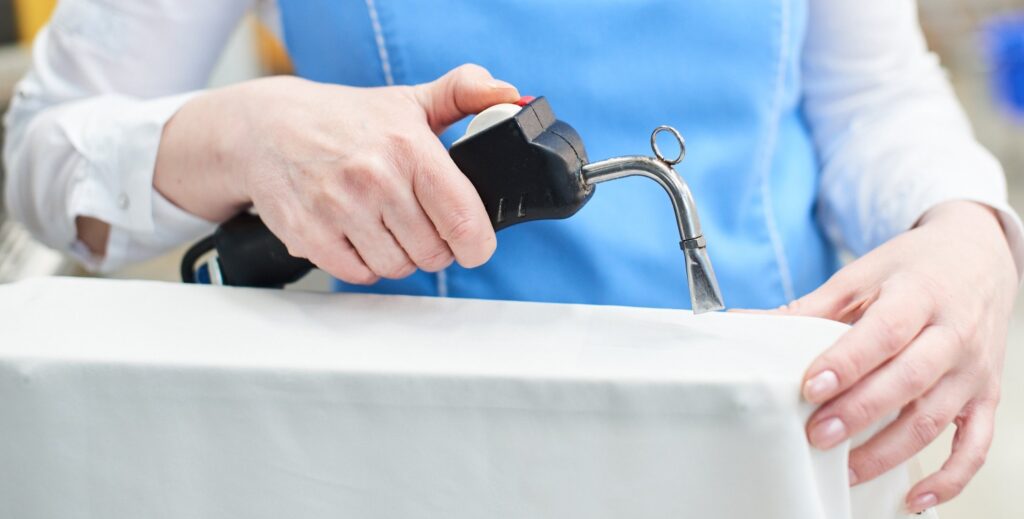
Pretreatment is a crucial step in the dry cleaning process that addresses stains before the full cleaning begins. It combines expert knowledge of stain removal with specialized cleaning agents to effectively target the problem areas.
Here's how stains are pretreated and why this step is crucial to maintain the appearance of your clothing.
The first step in pretreatment is to identify the stain type, as different stains require different solutions.
Before applying cleaning agents, the fabric’s reaction to the treatment is tested to ensure safety.
Once the stain and fabric are evaluated, the appropriate cleaning agent is applied directly to the affected area.
Certain materials demand extra care during pretreatment to preserve their unique qualities.
The dry cleaning machine process is the heart of professional garment care. Unlike traditional washing machines, dry cleaning machines use specialized solvents and precise cycles to remove dirt, oils, and stains while preserving the integrity of your garments. Let’s take a closer look at the steps involved and why this process is so effective.
The process begins with careful preparation and loading of the garments.
Once loaded, the machine begins its primary cleaning cycle using specialized solvents.
After cleaning, the machine removes the solvent from the garments.
Next, the garments are dried in the same machine using a specialized drying cycle.
Once drying is complete, garments go through a cooling phase to restore their natural texture. The machine gradually reduces the drum temperature to prevent shock to fabrics. This step helps maintain the softness and integrity of delicate textiles. Some machines use a softening agent to refresh the fabric and leave it feeling smooth to the touch.
Cleaners carefully inspect areas prone to stains, such as collars, cuffs, and underarms. Any lingering marks are treated again with targeted stain removal methods. Garments with stubborn stains are set aside for re-cleaning or specialized spot treatments.
Each garment is also checked for any discoloration or fading that might have occurred during cleaning For high value or delicate items, color-safe cleaning agents ensure the original vibrancy is maintained.
If repairs or alterations were requested during dropoff, this is the stage where they are verified. Repaired buttons and zippers are tested to ensure functionality and proper alignment. Missing buttons are replaced, and loose buttons are secured. For tailored garments, the post-cleaning inspection ensures that linings, seams, and padding are intact and correctly positioned.
The finishing touches are where a good dry cleaning job becomes a great one. It’s the stage where garments are polished, perfected, and prepared for their return to you. Here are a few finishing techniques that bring out the best in your garments, and why they are so critical.
Protect your high value garments with McLendon Cleaners - Longview’s trusted dry cleaning expert since 1945. For nearly 80 years, we have proudly provided exceptional care, unparalleled quality, and personalized customer service that truly sets us apart.
Our full range of services includes Dry Cleaning, Comforter Cleaning, Wash and Fold Laundry, and Wedding Gown Cleaning and Preservation—all designed to keep your garments in pristine condition! Call us at 903-757-7282 to schedule a service or visit one of our three convenient locations today!


✅ Up to 5 clothing pieces
⏰ Includes Next Day Service
Rewards expire at the end of the month!
Exclusions apply. Offer valid on everyday wear only.