Open Hours
7:00am-6:00pm Mon - Fri
Contact us
(903) 757-7282
Moving has a way of turning small tasks into bigger problems, and laundry is one of the most common casualties. It's not complicated on its own, but it needs time you don't have during a move, so it gets skipped, delayed, or packed away half-done.
That single shortcut is what leads to mildew, missed stains, and a laundry backlog waiting on the other side. A Wash and Fold Laundry Service can close that gap effortlessly without adding more to your plate. The plan below walks through what to do before you pack, what to avoid in transit, and how to catch up fast once you're settled.
It sounds obvious, but it is the step that gets skipped most often. Once boxes start piling up, clothes get folded straight from the hamper into a bin just to clear floor space, and three weeks later you unpack a box that smells like a gym locker. A final load or two before anything gets sealed away saves you from redoing the same work later, in a new place, with no system set up yet.
Before you touch a single box, run everything currently in hampers or on the floor through one of two piles.
Anything you are unsure about goes in pile one. A slightly damp gym shirt sitting in a box for two weeks is a bigger problem than a shirt washed one extra time.
This is the single costliest mistake people make when packing for a move, and it rarely feels like a mistake at the moment.
A still damp swimsuit thrown into a bag, a towel dried in a rush, a jacket that got caught in the rain on move-out day. None of it seems worth stopping for. Then the box sits sealed in a truck or a storage unit for days, sometimes longer, and what went in slightly damp comes out with mildew spots and a smell that does not wash out.
Mold needs three things to grow: moisture, warmth, and no airflow. A moving box checks all three. Cardboard traps humidity instead of letting it escape, a truck or storage unit can run warm for days, and nothing inside a taped box gets any air movement at all. The items most likely to cause trouble are those people don't think about twice:
Once your washer is disconnected or already on the truck, your options shrink fast. This is the point to decide what needs real attention now, while you still have the ability to do something about it, rather than after it has spent weeks in a box.
Some items are simply not worth the risk of sitting untouched through a move.
Send these out before the move rather than after. A stain that sits for an extra month is much harder to treat than one caught now.
This is the bag that keeps you from tearing open five unlabeled boxes on your first night in a new place, looking for a clean shirt. It should never go on the truck with the rest of your things. Keep it with you in the car, or set it aside as the very last thing loaded and the very first thing unloaded.
Pack for three to four days, not one.
That last item matters more than people expect. You will still generate dirty clothes during the move itself, and you need somewhere for them to go that isn't the floor of your new home.
Or skip the whole cycle and hand off the laundry side of this move entirely.
Most people expect the move itself to be the hard part. The two weeks after are usually worse for laundry specifically, because unpacking, address changes, and general logistics all compete for the same time and energy that laundry would normally receive. This is the window where a backlog builds quickly and quietly, until suddenly there is nothing clean left.
Small, consistent effort beats one big catch-up session that keeps getting pushed to next weekend.
Between packing boxes, changing your address, and coordinating a hundred other moving day details, laundry is one of the easiest things to let slide. You don't have to add it to your list. At McLendon Cleaners, our Wash and Fold Laundry Service functions as a genuine laundry service for movers and packers, built for exactly this kind of busy stretch.
Drop off a load before you seal the boxes, or send over what's piled up once you've unpacked, and we'll wash, dry, and fold every bit of it so it's ready to put away. No sorting, no folding, no laundry day eating into time you don't have.
Phone: (903) 829 4058
Email: care@mclendoncleaners.com
Your eye reads height in a few specific places: where a hem falls, where a waistband sits, how much width shows at the shoulder. Off-the-rack clothing gets those specific points wrong for a lot of real bodies, not because the clothes are poorly made, but because they're built for one statistical average that doesn't actually match your proportions.
Here's exactly which alterations move those points back to where they should be, for tops, pants, and dresses.
Height perception comes down to two things: how unbroken the vertical line looks, and where the horizontal breaks fall. A low waistband cuts your leg line short. A hem at the widest point of your calf does the same lower down. Every alteration in this guide works by moving one of those break points, not by changing your actual height.
The second factor is bulk. Excess width at the shoulder, hip, or hem reads as horizontal mass, and horizontal mass shortens a silhouette the way a wide frame shrinks a tall painting. Narrowing anything that pulls wide does more for a leaner look than almost any other change.
Alterations handle the structural side of this, but continuity plays a role, too. A top and bottom in close, unbroken color read taller than the same outfit split by high contrast at the waist. This isn't something a tailor alters, but it's worth knowing before you decide which pieces are worth the tailoring investment in the first place. A well-altered piece in a color-blocked outfit still won't outperform proportion and continuity working together.
Shoulder Narrowing, Torso Taper, Sleeve Length, and Hem Adjustment
Bringing in the shoulder seam to end at your natural shoulder point, instead of dropping past it, tightens the whole top of the silhouette and stops a jacket from reading boxy.
Taking in the waist and side seams creates real definition through the middle. This is usually the single biggest change for a rectangular-fitting top or blazer.
Sleeves that run past the wrist visually shorten the arm. Ending right at the wrist bone, or just above it, keeps the arm looking proportionate.
A top or jacket that hits at the hip bone elongates the leg line below it. Standard sizing often runs this hem lower than it needs to for shorter frames, which is one of the most common fixes we make.
These four rarely happen alone. Narrow a shoulder, and the sleeve cap often needs resetting. Taper a torso, and the hem can shift out of level. Expect your tailor to flag related changes. That's not upselling, it's what keeps the garment balanced instead of fitting well in one spot and off in another.
Rise Adjustment, Leg Taper, Correct Hem Break, and Skirt Length
Raising low or mid-rise pants to sit at your natural waist adds visible length to the leg. Tailoring for petite body types leans on this specific change more than almost anything else on this list, since a low rise genuinely visually shortens the leg on a smaller frame considerably more than on a taller frame.
A subtle narrowing through the leg, not a skinny fit, creates a longer line than a wide or straight leg does for most body types.
Pants that pool at the shoe cut the leg line horizontally right where you don't want a break. A slight break that just kisses the top of the shoe keeps the vertical line intact. Cropped pants should hit just above the ankle bone.
Hems should land just above the knee or at mid-calf, never at the widest point of the calf, which visually cuts the leg exactly where you want continuity.
Rise and hem length both depend on the shoes and, for pants, the belt you'll wear with the garment. A hem pinned with flats will sit wrong once you put on heels, and a rise that feels right without a belt can shift once one's added. Take both to your fitting so the alteration is measured against the real outfit, not a guess.
Waistline Placement, Hem Length, and Sleeve-Shoulder Coordination
A dress with a defined waist should sit at your natural waistline, not below it. A dropped waist shortens the torso and shortens you. Raising it is often the single change that transforms how a dress fits.
The same principle from skirts applies here: just above the knee or at mid-calf, never at the widest point of the leg.
The same shoulder and sleeve guidance from tops applies to dresses with structured sleeves or set-in shoulders.
A dress with a seamed waist, darts, or a lining holds a waistline alteration cleanly. A slip dress or unstructured knit relies on drape rather than seams, so raising the waist on one of these often means adding a seam that wasn't there originally, which changes the garment more than a simple adjustment. Ask your tailor if the construction of the dress supports the change before you commit to it.
Alterations shift proportions by inches. They can't change your actual height, and they can't fully rescue a piece that was cut for proportions radically different from yours. A jacket built for a long torso won't ever sit right on a short torso no matter how much is taken in, and a maxi dress designed to graze the floor on a 5'9" frame will need more than a hem adjustment on someone significantly shorter.
Not every fabric takes a change well. Leather and suede show old stitch holes when reseamed. Tightly woven silk and delicate lace can pucker or tear if let out. Pieces with a fused interfacing in the shoulder or lapel are harder to reshape without the structure showing through.
Ask before you commit money to altering a piece in one of these fabrics. A skilled tailor will tell you up front if the fabric will fight the alteration rather than let you find out after the work is complete.
Getting the result you picture starts with how you explain it. Vague requests get vague results.
Take the shoes you'll wear with the piece. Hem and rise decisions depend on them. Describe the goal, not just the garment. Say “I want this leg line to look longer”, or “I want this jacket less boxy”, instead of just handing over the piece.
Ask what's actually possible on that specific garment, since fabric, seam allowance, and construction all limit what can be done. And be open to alterations for which you didn't ask. A tailor who catches that your sleeve needs resetting after a shoulder change is doing you a favor, not padding the invoice.
A piece is worth altering when it's one or two changes away from working: a hem, a taper, a rise adjustment. It's worth replacing when it would require three or more structural changes to fit properly, when the fabric resists alteration, or when the original cut is so far from your proportions that no amount of tailoring can close the gap.
Ask yourself if the piece fits well everywhere except one area. If yes, that's almost always worth altering. If you find yourself listing multiple problem spots, from the shoulders down to the hem, the cost of fixing it all usually outpaces just buying something cut closer to your proportions to begin with.
Standard sizing is cut for average proportions, and if yours run differently, even a piece that technically fits can still look boxy or short. That's exactly what the alterations in this guide are built to correct.
At McLendon Cleaners, our expert Alteration and Repair Service for Kilgore, Texas customers works with your proportions in mind, not just your measurements. We know how a shoulder taper changes the way a sleeve sits, how a raised waistline reshapes a dress, and which pieces are worth altering versus those that have simply run their course.
For anyone searching for alterations near Kilgore, Texas, bring in what isn't fitting the way you pictured it, and we'll walk you through exactly what's possible.
Phone: +1 903 829 4058
Email: care@mclendoncleaners.com
Wedding dress preservation isn't really a yes or no decision. You're already going to do it eventually. The real decision is which version of it you get, the full set of benefits or a smaller, partial version of the same thing, and timing is the only variable that separates them.
Nothing about the service changes. What changes is how much of it is still actually available by the time you book.
Here are the three categories of benefits still fully within reach, and what starts to shrink the longer the dress waits.
The first weeks after your wedding are the window where your dress is easiest to fully restore. Here's what's actually at stake in that window, and why it closes gradually rather than all at once.
Some of the marks on your dress aren't visible yet. Champagne, sweat, body oil, and makeup soak into fabric fibers without leaving an obvious stain on your wedding day. Given time, those residues oxidize and turn into the yellow or brown discoloration brides often discover months later and assume is unrelated to anything that actually happened at the wedding.
This is the most immediate, tangible protection benefit on this list, since it applies to nearly every dress regardless of fabric type, and it's also the issue most brides don't realize is already in progress the moment the wedding ends.
There's a real difference between sealing a clean dress and sealing a dress that only looks clean. A specialist who preserves your dress starts with a genuinely clean garment in a stable, acid-free storage. A dress boxed without proper cleaning first traps those same invisible residues inside, where they keep reacting with the fabric long after the box is sealed.
You end up with damage that develops in the dark, unnoticed, for years, inside a box that was supposed to protect the dress rather than quietly seal a problem alongside it.
Acting soon means the box for which you eventually pay actually does the job it's designed to do, holding a stable dress steady, rather than sealing away an active problem where nobody will notice it developing.
Silk, lace, and other delicate fabrics develop weak spots wherever they're folded and left under pressure for extended periods. A dress hanging in a closet or folded into a box without acid-free tissue accumulates that stress month after month, whether or not any visible staining happens at the same time.
Early professional preservation addresses this directly, using proper padding and rotation techniques before those weak spots ever form. This benefit has nothing to do with stains or residue. It's a separate, purely mechanical reason to act soon, since fold stress accumulates on its own timeline regardless of how clean the dress otherwise.
Beyond the fabric itself, timing affects what you can actually do with this dress years from now, long after the specific details of the wedding day have started to blur.
If there's any chance a daughter, niece, or future family member might wear this dress one day, timely preservation keeps that door open. A dress preserved soon after the wedding retains its structure and color well enough to be worn again decades later.
Delayed preservation sometimes uncovers damage that's already set in, closing off that possibility before anyone actually gets the chance to decide if they want it. This matters even if you're not sure yet whether the dress will ever become an heirloom, since deciding later, once damage has already accumulated, means the option itself may no longer be fully available.
Plenty of brides aren't sure yet if they'll want to sell or donate their dress someday. That's a decision you don't have to make right now, but preserving the dress early keeps it in a condition where the option still genuinely exists.
A dress with set-in stains or fabric breakdown loses much of its resale and donation value, regardless of how it started or how beautiful the original design. Buyers and donation programs both expect a stable, structurally sound dress, not one carrying years of accumulated, untreated damage.
Damage from delay rarely stays minor. What starts as a treatable stain can become discoloration that requires specialized restoration work. Restoration almost always costs more than preservation would have in the first place, since it addresses damage that's already happened rather than simply maintaining a dress that never developed that damage at all.
Acting soon is typically the least expensive path over the life of the garment, not just the safest, even though preservation itself carries a real cost up front.
This is the category most preservation content skips entirely, and it matters just as much as the fabric science, since it has nothing to do with the dress itself and everything to do with you.
Right now, the dress is one more thing sitting in the back of your mind. Preserving it soon means it's actually done. No more wondering if you're waiting too long, no more low level worry every time you glance at the closet.
This benefit doesn't require any of the protection or longevity benefits to matter to you personally. Even a bride who isn't especially worried about oxidation or fold stress often still feels a real, specific relief once the dress is actually handled rather than pending.
The intake process is the right time to attach receipts, appraisals, wedding day photos, and notes about any known spills or incidents. Right after the wedding, you remember these details clearly. Weeks or months later, that same information gets harder to recall accurately, and some of it gets lost for good.
This documentation isn't just sentimental. It gives a preservation specialist useful context for treatment, and it creates a record that matters if the dress is ever insured, appraised again, or passed down with its actual history intact rather than reconstructed from memory decades later.
The wedding is over, but your follow through list probably isn't short: thank you notes, vendor payments, name changes, the honeymoon photos you still haven't sorted. Crossing preservation off that list is a genuine win in a season where wins can be hard to find.
This benefit is easy to dismiss as minor compared to protecting the fabric itself, but it's real, and it's worth naming directly rather than assuming only the fabric related benefits actually matter to a bride deciding whether to act this week or put it off further.
You don't need a complicated plan here. You need a handful of steps and a rough timeline.
How soon should you clean your wedding dress before this appointment? Not at all. Bring it exactly as it is and let the specialist see the actual condition first, rather than attempting anything yourself beforehand.
Preservation isn't a guarantee against every possible outcome. Some damage may already exist by the time a dress reaches a specialist, regardless of how soon it's brought in. A good specialist gives you an honest assessment at intake rather than promising a perfect result before they even see the dress. That honesty is part of what you're actually paying for.
McLendon Cleaners gives Longview brides an honest intake to the wedding dress preservation process – inspection first, damage assessment openly shared, and treatment individualized to what your specific dress actually needs.
We've cared for wedding dresses in Longview, Texas for over 75 years, offering personalized, in-house preservation for every dress that comes through our doors. We inspect the beading, embroidery, and delicate fabric specifically, treating each area according to what it actually requires rather than a single process applied to every dress.
Schedule an intake this week or call to describe your dress, and we'll walk you through exactly which of these benefits are still fully available for your specific dress.
Phone: +1 903 345 8841
Email: care@mclendoncleaners.com
Most people think of dry cleaning as a way to get rid of visible stains. It is, but that's a small part of what it actually does. The bigger job is removing the things you can't see – body oils, sweat residue, fragrance buildup, and airborne particles that settle into the fabric every time you wear it.
When you skip dry cleaning entirely, none of that gets removed. It just builds up. Here's what that buildup does to a suit over time.
Every time you wear your suit, your skin transfers oils and sweat into the fabric. Hanging it back up doesn’t stop anything; those residues sit in the fibers and keep working on them. In wool suits especially, this breakdown starts at the thread level, long before you’d ever spot it by looking.
The result: your suit slowly loses its crisp feel and clean drape. It starts to feel “tired” even when it looks fine on a hanger.
Skin contact is heaviest at the collar, cuffs, and seat, so that’s where damage shows up first.
If your collar looks different from the rest of the jacket, that’s your suit telling you it’s overdue.
A lot of suit owners think “it still looks okay”, until they take a closer look. Stains and discoloration don’t appear all at once. They build slowly, then suddenly become obvious.
Stains from wine, sauces, or sugary drinks often look minor right after the spill. Over months, they oxidize and darken. What was barely visible at a dinner event can turn into a clear brown mark by the time you check again. Storage doesn’t stop this process. It only slows it down.
Yellow discoloration along seams and fold lines isn’t a stain sitting on top of the fabric; it’s a chemical reaction between sweat residue, the wool’s natural dyes, and the suit’s finishing treatments.
✅ Caught early: often treatable
⚠️ Left long enough: can become permanent
If you’ve noticed yellowing along your jacket’s folds, that’s a sign the suit needs attention now, not “eventually.”
Short answer: sometimes, but the margin for error is small.
If a stain is fresh, small, and on the outer fabric only, blotting it gently with a damp cloth right away can help.
That’s the limit. Beyond that:
Some stains don’t just resist home cleaning; they get permanently worse, including:
For any of these, getting the suit to a professional within 24 to 48 hours gives you the best shot at full removal.
Dry cleaning solvents dissolve oils, waxes, and grease at the fiber level, the exact residues a damp cloth can’t touch. For a suit worn 20 or more times without cleaning, this means months of built-up oils come out in a single visit, often restoring the fabric’s original feel and drape immediately.
A suit’s structure comes from its canvas interlining, lapel roll, and shoulder shaping, all maintained through consistent professional pressing. Without it, the canvas settles, and the fabric relaxes into whatever shape you’ve been sitting and standing in. Professional pressing on the correct form resets that structure. A standard iron at home can’t replicate this.
Use this as your baseline:
That last point matters more than people expect. Residue sets in during storage, not on the way into the closet. A suit that goes into storage dirty comes out with deeper, harder-to-treat stains than one cleaned beforehand.
If any part of this guide sounded familiar – a stiff collar, a stain that won’t fade, a jacket that’s lost its shape – your suit is telling you it’s time for a professional clean, not just another wear.
That’s exactly what we do at McLendon Cleaners. We provide expert dry cleaning for suits, formalwear, and delicate garments that traditional washing can’t handle, and we’ve been doing it for the residents and businesses of Longview and the surrounding communities for years. Whether it’s built-up oils, a set-in stain, or a suit that just needs its shape restored, we know how to bring it back.
Drop off your suit with us and let’s get it looking and feeling the way it should.
Before you book a laundry service, your brain does the same calculation every time. It sounds convenient. But is it actually worth it for a household like mine? What will it actually cost per month – not a vague range, but a real number I can compare against what I'm spending now?
This guide gives you that number. Not estimates wide enough not to mean anything, but actual weekly and monthly costs broken down by household size for residents in Longview, Texas. Find your tier below and you'll know exactly what to expect before your first pickup.
Before the numbers make sense, you need to know how laundry services structure their pricing. Most Wash and Fold Laundry Services charge by the pound. In the Longview and East Texas market, that typically runs $1.50 to $2.00 per pound. That rate covers sorting, washing your clothes and home essentials in customer-specific loads, drying, and folding to a consistent standard.
Pickup and delivery, dry cleaning, and specialty items such as comforters are generally priced separately. More on that in the final section.
Here’s what the standard per-pound rate includes:
Throughout this guide, all estimates use $1.75 per pound, the midpoint of the local Longview market range.
Some services offer flat monthly rates that cover a fixed number of pounds or pickups. These plans work well if your laundry volume is predictable week to week, think of a couple with a consistent routine.
If your household does laundry in large seasonal batches or your volume swings significantly month to month, a per-pound model is usually more economical. Know your pattern before you commit to a plan.
Single person (8 to 12 lbs. per week) | Weekly: $14 to $21 | Monthly: $56 to $84
A single adult generates roughly 8 to 12 pounds of laundry per week. At $1.75 per pound, the math looks like this:
Compare those numbers to a laundromat: 4 to 6 visits per month, each costing $4 to $6 per load plus 90 to 120 minutes of your time. That’s up to 12 hours a month standing next to a dryer.
A single person with a washer and dryer at home will find the math harder to justify unless time is genuinely tight. The clearer case is someone renting without in-unit laundry. You already spend money at the laundromat and burn hours getting there and back.
If that’s you, a Wash and Fold Laundry Service near Longview, Texas, may cost about the same per month with none of the inconvenience.
Two-person household (15 to 20 lbs. per week) | Weekly: $26 to $35 | Monthly: $105 to $140
Two adults generate roughly 15 to 20 pounds of laundry per week. Here’s what that runs:
At 15 to 20 pounds per week, a couple doing laundry at home runs the machine 3 to 4 times per week. Add up the laundromat cost or the utility bills, plus the time spent sorting, folding, and putting away, and the gap between DIY and a service starts to look a lot smaller.
Family of 3 to 5 (25 to 40 lbs. per week) | Weekly: $44 to $70 | Monthly: $175 to $280
A family of 3 to 5 generates 25 to 40 pounds of laundry per week. That’s where wash and fold pricing makes its strongest case:
At 30 pounds per week, you run the washer and dryer every day or close to it. Managing children’s clothes, school uniforms, towels, and bedding on top of adult laundry routinely takes 5 to 8 hours per week when done at home, folding, sorting, and putting away included. That’s 20 to 30 hours per month. For a family already stretched thin on time, this is not a trivial number.
Let’s put it side by side. A family doing 30 pounds of laundry per week at home spends roughly $30 to $40 per month on utilities and supplies. A laundry service at the same volume runs $175 to $200 per month. The difference is $135 to $170 per month, and what that buys back is 20 to 30 hours of family time. That’s a weekend. Whether that trade is worth it depends on what your household does with those hours.
The per-pound rate is the baseline, not the total. Several factors can shift your actual monthly bill. Ask about all of these before your first pickup.
Some laundry services in Longview include pickup and delivery in their per-pound rate. Others charge $5 to $15 per round trip. For a household using the service twice a week, that could add $40 to $60 per month to your bill.
Always ask for the full weekly cost at your expected volume, not just the per-pound price. A service charging $1.50 per pound with a $10 delivery fee can end up costing more per month than one charging $1.75 with free delivery at the same volume.
Comforters, down items, dry clean only garments, and heavily soiled loads are typically not covered under the standard per-pound price. These are priced separately, and that’s not a hidden fee if you know how to ask. A quick conversation at your first drop-off eliminates most billing surprises.
Here’s what to flag up front:
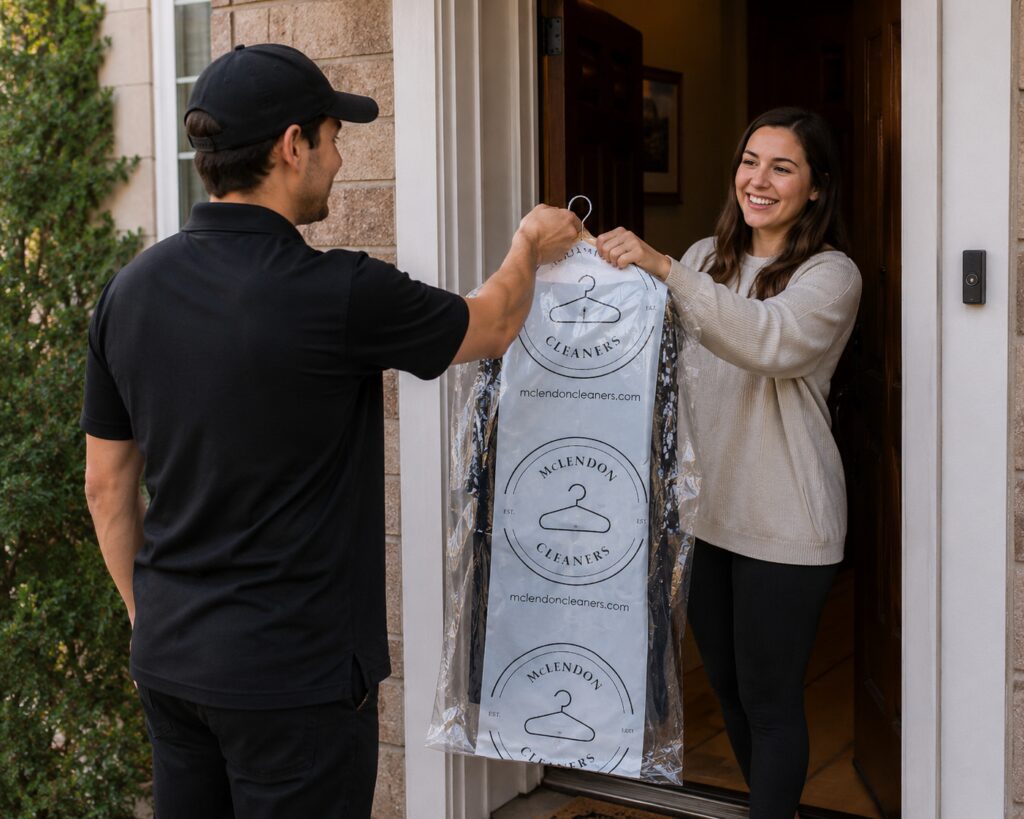
The estimates in this guide are a solid starting point. Your actual cost depends on your load size and how often you need pickup.
At McLendon Cleaners, we keep our pricing straightforward. You pay based on the weight of your laundry, with no inflated flat fees for light weeks and no surprises when you bring in a heavy load.
If consistent volume is more your speed, our Time Saver Plan locks in a fixed monthly price for a set number of bags, predictable, set and forget, and built for households that need laundry handled on a reliable schedule.
Reach out, tell us your household size, and we’ll walk you through which option makes the most sense for your budget.
📍Our convenient drive thru locations
🕒 Monday - Friday: 7:00 AM - 6:00 PM | Saturday: 8:00 AM - 12:00 PM


✅ Up to 5 clothing pieces
⏰ Includes Next Day Service
Rewards expire at the end of the month!
Exclusions apply. Offer valid on everyday wear only.